
Robin’s Review of The Mirror of the Self: Archetypes, Shadows, and the Sacred Struggle for Meaning
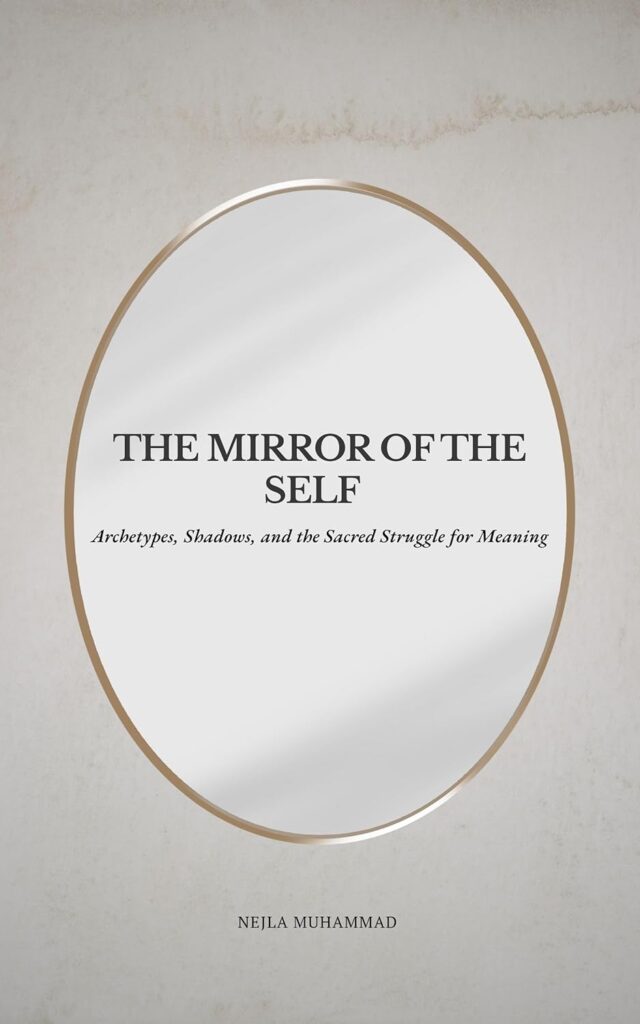
Title: The Mirror of the Self: Archetypes, Shadows, and the Sacred Struggle for Meaning
Author: Nejla Muhammad
Genres: Self-Help, Religion & Spirituality
Pages: 112
Source: Kindle, Paperback, Hardcover
The Mirror of the Self: Archetypes, Shadows, and the Sacred Struggle for Meaning
What do we see when the noise fades and we are left alone with our thoughts?
The Mirror of the Self invites readers on a quiet journey inward — a space between psychology and reflection, where science meets the soul.
Drawing from human experience, emotional insight, and philosophical depth, this book explores how our hidden fears, memories, and longings shape the stories we tell ourselves.
It asks what it means to live authentically in a world that constantly asks us to perform.
Written in a tone that is both honest and contemplative, The Mirror of the Self is for anyone seeking to understand themselves beyond roles, expectations, or labels — and to rediscover meaning in the stillness that remains.
Robin’s Review
The Mirror of the Self is the kind of book that looks you in the eye, asks how you are really doing, and then refuses to let you dodge the question with a to do list or a positive affirmation. It is quiet, contemplative, and stubbornly uninterested in giving you five steps to anything. If you like your self help with worksheets and action plans, this will feel less like a guide and more like sitting in the waiting room of your own soul, watching old patterns shuffle by.
Nejla Muhammad leans hard into archetypes and inner landscapes. The mask, the tyrant within, the betrayed and the beloved, the shadow of the healer, the rebel, the witness, the mirror of truth. It reads like a long, thoughtful letter to the part of you that is tired of performing, tired of spiritual posturing, and tired of pretending burnout is a personality trait. The sections on the healer and the sensitive soul hit especially hard, since they name the very real cost of compulsive caretaking without glamorizing martyrdom.
The writing is lyrical and spacious. Sentences spiral back to ideas instead of marching forward like a TED talk. There is repetition by design. Nejla Muhammad tells you up front this is not a book to finish, but one to return to, and Nejla Muhammad means it. You could open almost any chapter and find a line that feels like it was written for that one client, that one wound, that one version of you on the bathroom floor at 2 a.m., wondering why doing everything “right” still hurts.
The snarky part of me needs to say this: if you are allergic to abstraction, you may twitch. There are almost no concrete stories, no named characters, no case studies. At times it can feel like being wrapped in very eloquent fog. You will not walk away with a crisis pantry list for your nervous system. You will walk away with questions that rustle around for days, which is either soothing or maddening depending on how much you like being alone with your thoughts.
Where the book shines is in its refusal to flatter the reader. Awakening is presented as rupture, collapse, disillusionment, and then a very unglamorous return to presence. The final reflections on simplicity, on presence, honesty, and kindness as the actual fruit of all this inner work, land with a quiet authority that does not need to posture.
In short, this is not a hype book. It is a mirror. If you are exhausted by spiritual performance and hungry for something slower and more honest, this one will sit patiently on your nightstand, waiting for you to be ready to really look.
Reviewed by Robin for Robin’s Review
Walk With Me Into the Dark

You May Also Like

Robin’s Review of Father Is Pleased
Fresh Meat: Definitive Edition